
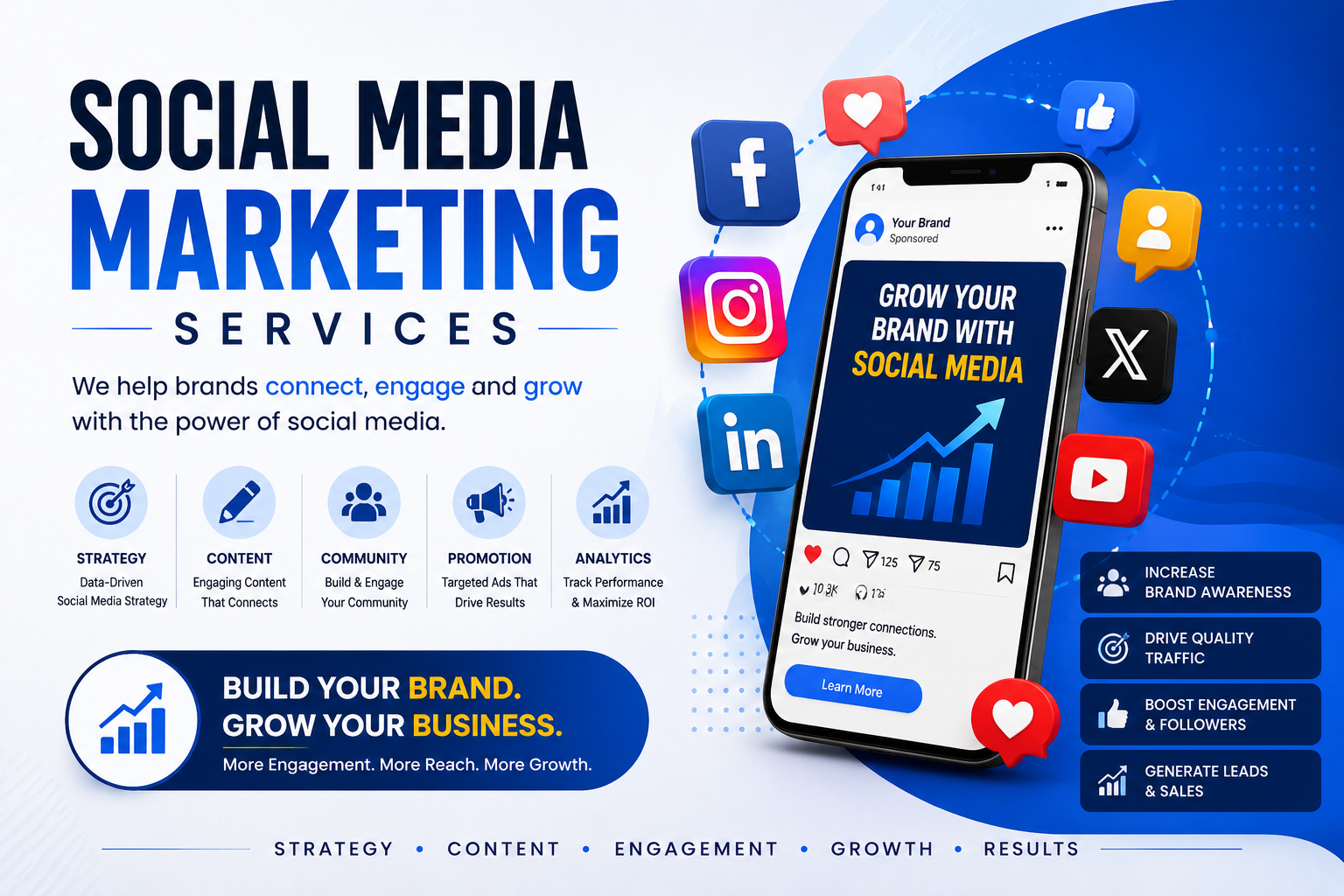
What "Social Media Marketing" Actually Means for a B2B or D2C Brand
A retail brand chasing Instagram Reels views needs a completely different content cadence, budget split and creative team than a B2B software company trying to generate leads through LinkedIn. Treating both the same way - a generic "post 3x a week, boost the best ones" formula - is why most social media retainers stop producing results after month two. Urgent IT Solution builds the plan around the platform's actual ranking behaviour and the buyer's actual decision path, not around a one-size content calendar template.
Before any content gets made, we look at where the audience already spends attention (Instagram/Facebook for consumer purchase decisions, LinkedIn for B2B and hiring-adjacent brand building, YouTube Shorts and Instagram Reels for top-of-funnel discovery, Twitter/X for real-time industry commentary), and we size the effort against what the business can realistically sustain - shoot frequency, approval turnaround, product photography access, founder or SME availability for video.
Organic Strategy vs Paid Social - Where the Line Sits
Organic content builds recognition and answers objections over time; it rarely drives direct conversions at scale on its own once a page's follower base is small or new. We set expectations correctly from the start: organic posting sustains presence and trust, while paid social (Meta Ads Manager, LinkedIn Campaign Manager, boosted posts) is what actually moves reach, leads and sales in a predictable timeframe. Most retainers we run combine both - a content engine for brand voice and proof, and a paid layer for pipeline.
Deliverables in a Typical Monthly Retainer
- Content calendar - typically 12-20 posts/month across chosen platforms, planned around product launches, festivals/seasonal moments, and industry events relevant to the client's sector.
- Creative production - static carousels, short-form video edits, motion graphics for announcements, and copywriting tuned to each platform's tone (LinkedIn long-form vs Instagram caption-first vs X short punchy lines).
- Community management - responding to comments, DMs and reviews within an agreed SLA window, flagging escalations (complaints, negative sentiment) to the client instead of auto-replying with scripts.
- Paid campaign setup - audience research, pixel/conversion API setup on the client's website, ad set structuring (awareness, consideration, conversion), and creative testing across at least 2-3 variants per campaign.
- Monthly reporting - reach, engagement rate, follower growth, click-through rate, cost per result and, where tracking is set up, cost per lead/purchase - tied back to the objective agreed at the start, not vanity metrics alone.
Platform-by-Platform Approach
Meta (Facebook and Instagram)
Best suited for D2C, local services, hospitality, real estate and e-commerce. We prioritise Reels and carousel formats because Meta's algorithm currently favours native video and saves/shares over plain image posts. Paid campaigns run through Ads Manager with proper event tracking (Purchase, Lead, Add to Cart) via Meta Pixel or Conversions API so budget isn't spent blind.
Used for B2B lead generation, recruitment marketing and thought leadership. Content leans on founder/employee personal profiles alongside the company page, since LinkedIn's own algorithm distributes personal-profile posts further than company-page posts in most cases. Lead Gen Forms and Sponsored Content are used when the goal is demo requests or downloads rather than brand awareness.
Instagram/YouTube Shorts for Discovery
Short-form video is treated as a discovery channel, not a direct-response one - we measure it on reach, shares and profile visits rather than expecting immediate conversions from a 15-second clip.
Twitter/X
Reserved for clients in tech, SaaS, media or industries where real-time commentary and customer support visibility matter; posting cadence here is lighter but response time to mentions is faster.
How a New Engagement Starts
We begin with an audit of existing pages (or a blank-slate plan if there's no prior presence): follower quality, past post performance by format, competitor benchmarking, and a review of any past ad spend and its results if the client has run campaigns before. From that audit we set 2-3 measurable objectives for the first quarter - follower growth is rarely one of them; lead volume, website traffic from social, or direct sales attribution usually are. Creative and copy go through a client approval step before publishing, and we agree a content calendar in advance rather than posting reactively.
Content Approval and Turnaround
Clients typically review a batch of content (a week or two weeks at a time) rather than approving post-by-post, which keeps the calendar moving without daily back-and-forth. Urgent notices - a product recall, a press mention, a time-sensitive offer - are handled outside the standard calendar with expedited turnaround.
Where Social Media Marketing Fits with Other Work
Social campaigns perform better when the landing experience matches the ad promise - so when a client is running paid social to a website that isn't built for conversion (slow load, no clear form, mismatched messaging), we flag that early rather than spending ad budget against a broken funnel. In cases where the client's website or app also needs work, that's handled as a separate, clearly scoped project rather than bundled invisibly into the marketing retainer.
Reporting and What "Success" Is Measured Against
Every retainer is reported against the objective set at onboarding, not a generic dashboard. For a lead-gen focused LinkedIn campaign, that means cost per qualified lead and form-fill rate. For a D2C Instagram push, that means cost per purchase and return on ad spend, cross-checked against the store's own order data where access is available. For brand-awareness-only mandates (common for new product launches with no prior audience), reach, video completion rate and follower growth quality (not just count) are the tracked numbers. Reports are delivered monthly with a short written interpretation - not just exported charts - so the client knows what changed and why, and what's planned for the next cycle.