
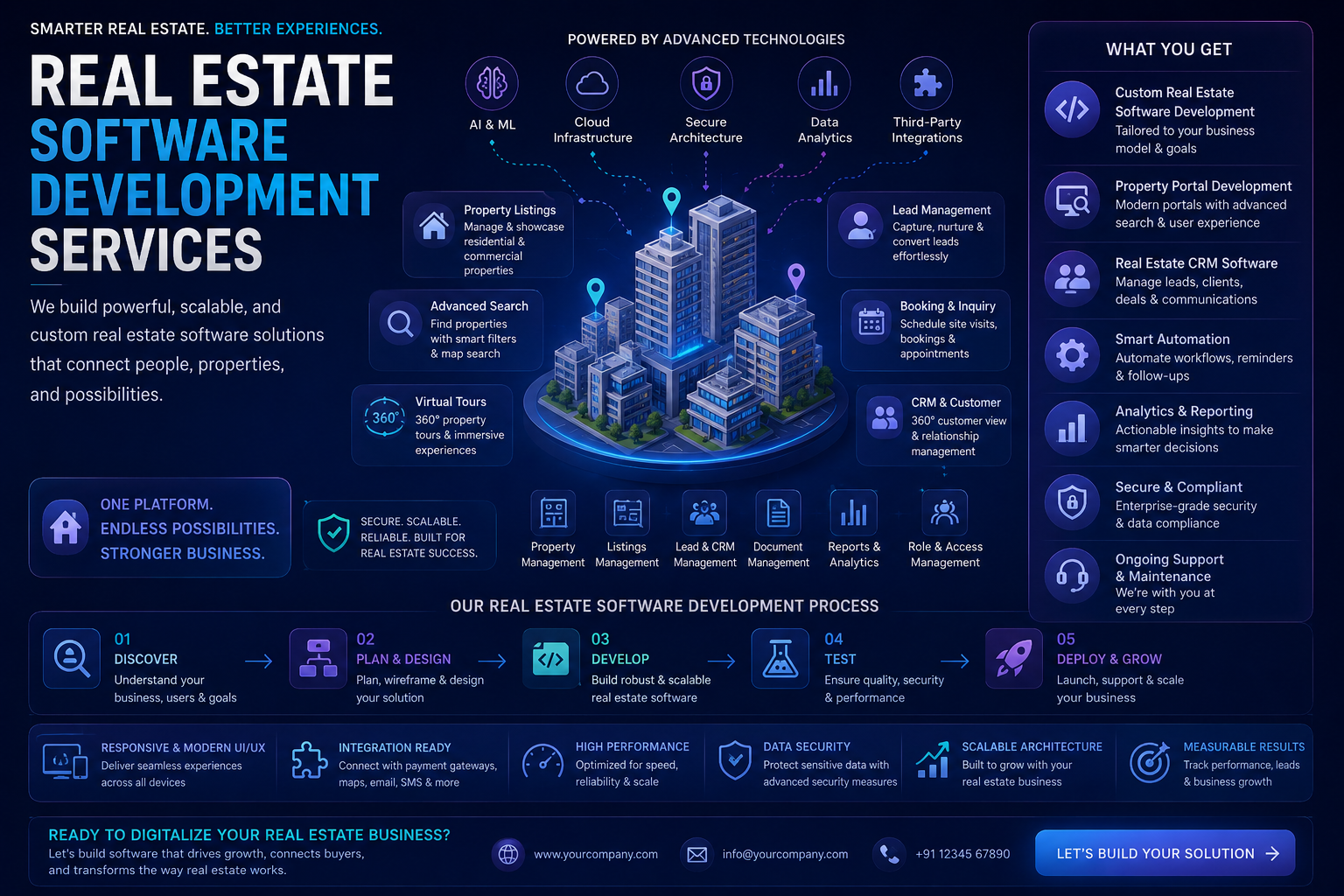
What "Real Estate Software" Actually Means for This Industry
A builder tracking 400 units across three towers has a different data problem than a brokerage juggling 2,000 third-party listings, and both are different again from a channel partner network reconciling commission payouts every month. Real estate software development, when done properly, is not a single CRM template - it's a set of interconnected modules: inventory and unit-level status tracking, lead capture and routing, site-visit scheduling, document and payment tracking, and post-sale possession workflows. Urgent IT Solution builds these as modular systems so a developer, a broker, or a facility management team gets exactly the pieces they need instead of a bloated generic CRM repurposed for property.
Inventory Management That Reflects Real Unit Status
The core complexity in any builder or developer platform is unit-level inventory state: available, on-hold, booked, agreement signed, registered, possession handed over. Each state has different business rules - a "hold" might auto-release after 48 hours, a "booked" unit needs a payment schedule attached, a "registered" unit triggers a different tax and documentation flow. We model this as a state machine tied to the unit master (tower, floor, unit number, carpet area, facing, price list version) so sales teams and channel partners always see current, conflict-free availability instead of spreadsheets emailed between offices.
Lead Capture, Routing and CP (Channel Partner) Management
Leads for real estate arrive from portals (99acres, Housing, MagicBricks), Meta/Google ad campaigns, walk-ins, and channel partner referrals - often the same lead from multiple sources. We build de-duplication logic based on phone number and project interest, automatic routing to the right sales executive by territory or project, and a channel partner portal where CPs can register leads, track commission status, and avoid disputes over "who sourced this client first." Commission slabs, TDS deduction, and payout schedules are configurable per CP agreement rather than hardcoded.
Core Modules We Build
Site Visit and Booking Workflow
Site visit scheduling connects the lead record, the sales executive's calendar, and unit availability at the time of the visit. On confirmation, we typically integrate SMS/WhatsApp reminders (via providers like Gupshup or MSG91) and capture visit feedback that feeds back into lead scoring. Booking itself moves through token amount collection, agreement generation from templates with dynamic clauses, and payment schedule setup tied to construction-linked or time-linked plans.
Payment Tracking and Construction-Linked Plans
Construction-linked payment plans (CLP) require the system to know both the payment milestone and the actual construction stage, and flag mismatches automatically. We build payment ledgers per customer with due date tracking, penal interest calculation for delays, receipt generation, and reconciliation against bank statements or payment gateway records (Razorpay, PayU, or direct NEFT entries logged manually by accounts).
Listings and Portal Syndication for Brokerages
For brokerages and agencies, the recurring pain is managing listings across multiple portals without re-entering data each time. We build a central listing repository with a single source of truth for price, availability and media, then push updates to portals that support feed-based syndication (XML/CSV feeds or API where the portal offers one). This cuts down the manual re-listing work that eats broker time every time a price changes.
RERA Compliance and Document Management
Indian real estate projects need RERA registration numbers displayed on marketing material, quarterly progress disclosures, and defined timelines communicated to buyers. We build document repositories tagged by project and unit (allotment letters, agreements, NOCs, occupancy certificates) with access control so buyers see only their own documents, and admin teams can track what's pending for each unit before registration.
Technical Approach and Stack Decisions
Most builds are web-first with a responsive dashboard for internal teams (sales, CP, accounts, management) and a lighter customer-facing portal or mobile app for buyers to track payment status and documents. Typical stack choices: Node.js or Laravel for the backend depending on team preference and existing systems to integrate with, React or Next.js for admin dashboards, and React Native or Flutter when a buyer-facing mobile app is part of the scope. Data volumes in real estate platforms are usually moderate - the complexity is in business rules and state transitions, not raw scale - so we favor PostgreSQL or MySQL with careful schema design over unit status and payment history rather than defaulting to NoSQL.
Integration Points We Commonly Handle
- Property portal lead APIs and feed uploads (99acres, Housing.com, MagicBricks)
- WhatsApp Business API or SMS gateways for visit reminders and payment due alerts
- Payment gateways and bank statement reconciliation for booking amounts and EMIs
- Google Maps/geolocation for project micro-site and site-visit routing
- Existing accounting software (Tally, Zoho Books) for payment and GST data sync
Who Actually Needs This vs. Who Needs a Simpler Tool
A developer with one or two live projects and a small sales team is often better served by configuring a mid-market real estate CRM than commissioning custom software - the ROI on custom development shows up once you're managing multiple projects, a CP network, or payment plans complex enough that spreadsheets and generic CRMs start producing errors. Similarly, a solo broker with a few dozen listings doesn't need a syndication engine; that becomes worthwhile once you're managing listings across five or more portals with frequent price changes. We tell prospective clients this upfront during scoping rather than pushing a custom build where a configured tool would do the job cheaper and faster.
How We Scope and Deliver a Project
We start by mapping the actual current process - how leads move today, how inventory is updated, where payment tracking breaks down - usually through a walkthrough with sales, CP, and accounts teams rather than just the management stakeholder. From there we define the unit master schema, the lead and payment state machines, and which third-party integrations are non-negotiable (portal feeds, payment gateway, WhatsApp). Delivery is phased: inventory and lead management first since those unblock daily sales operations, followed by payment tracking and document management, then CP portal and reporting dashboards. Each phase ships as usable software, not a demo, so sales teams start working in the new system incrementally instead of waiting for one large go-live.
Post-Launch Support
Real estate platforms need ongoing adjustment as new projects launch, price lists change, and payment plan structures evolve for each new tower or phase. We keep support scoped to configuration changes (new project setup, new CP agreements, updated payment templates) separate from structural changes (new modules, new integrations), so clients know what's covered under a support retainer versus what's a new development request.