
Why Most B2B Lead Lists Fail Before the First Email Goes Out
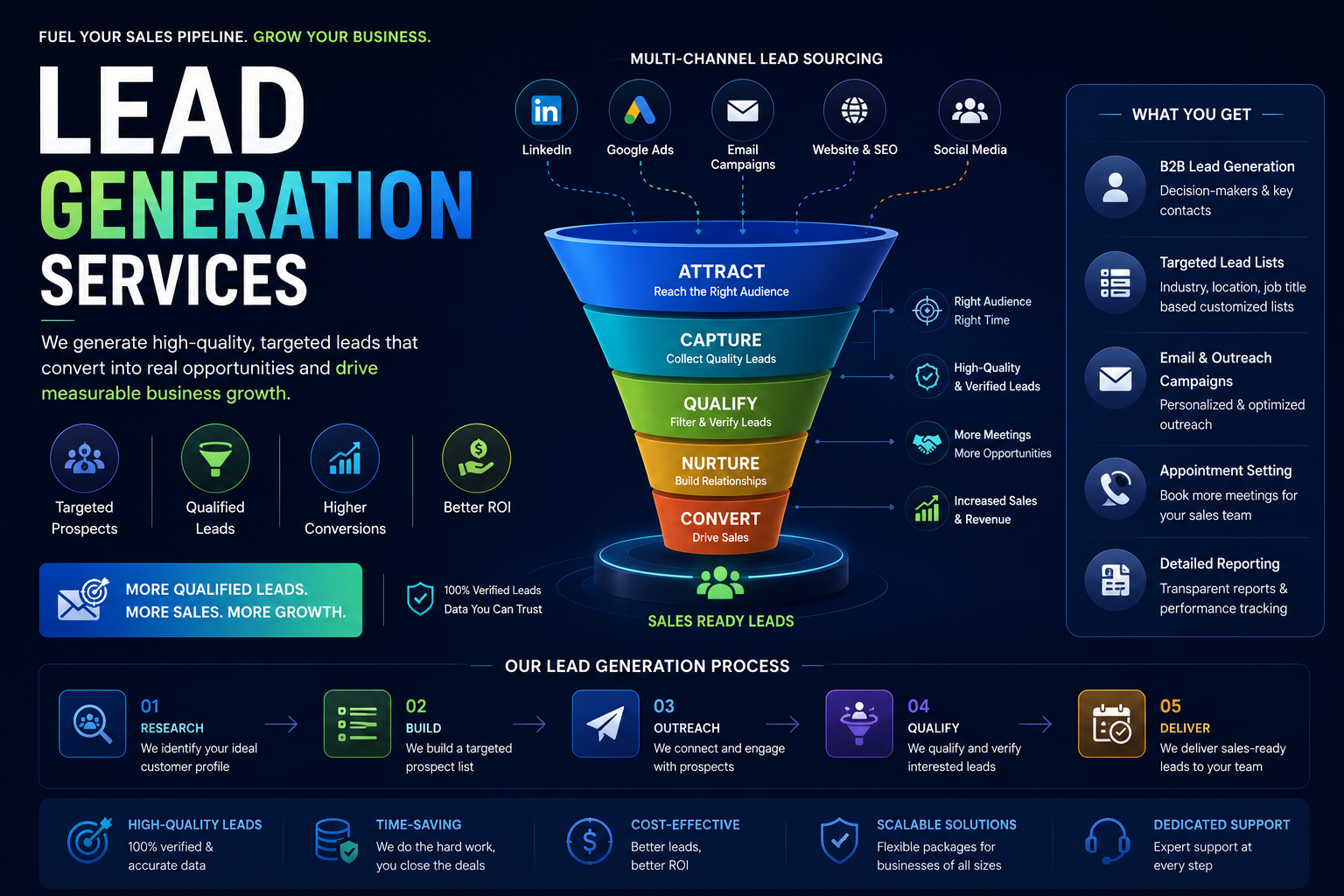
A list of 5,000 "decision-makers" scraped from LinkedIn and run through a generic outreach sequence produces bounces, spam complaints and a handful of unqualified replies that sales reps end up ignoring after the second week. B2B lead generation only works when the targeting logic is right before any message is written: correct ideal customer profile (ICP), verified firmographic and technographic filters, and a sequence that matches where the account actually is in its buying cycle. Urgent IT Solution builds that targeting layer first, then layers channels - cold email, LinkedIn outreach, paid intent capture, SEO-driven inbound, and account-based marketing (ABM) - on top of it, so every list we run is one we can defend with data, not guesswork.
What Actually Goes Into the Service
ICP and TAM Modeling
We start by defining the Ideal Customer Profile using firmographic data (industry, employee count, revenue band, tech stack from tools like BuiltWith or Wappalyzer signals) and behavioral data (recent funding, hiring surges, job postings for specific roles, G2/Capterra activity). From this we size the Total Addressable Market and segment it into tiers - Tier 1 accounts get manual research and personalized sequences, Tier 2 gets semi-automated multi-touch cadences, Tier 3 gets nurture-only email/LinkedIn touches.
Data Sourcing and Verification
Contact and company data is pulled from a combination of sources - Apollo, Clay, ZoomInfo-style enrichment, LinkedIn Sales Navigator exports, and first-party form fills - then cross-verified for email deliverability (Bounceless/NeverBounce-type checks) and role accuracy before it ever enters a sequence. We don't buy static lists and run them as-is; stale data is the single biggest cause of domain reputation damage in cold outreach.
Multi-Channel Outreach Execution
- Cold email: domain warm-up, SPF/DKIM/DMARC configuration, sending-domain rotation, and copy built around a specific trigger event rather than a generic pitch.
- LinkedIn outreach: connection requests tied to content engagement, InMail sequences for Tier 1 accounts, and comment/engagement plays to warm up prospects before a direct pitch.
- Paid intent capture: LinkedIn Lead Gen Forms, Google Search campaigns on commercial-intent keywords, and retargeting for site visitors who didn't convert on the first pass.
- ABM plays: coordinated multi-channel sequences (email + LinkedIn + retargeting ad) aimed at a named list of 20-200 target accounts, often paired with a personalized landing page per segment.
Qualification and Handoff
Replies are triaged manually against BANT or MEDDIC-style criteria before they're marked as a Sales Qualified Lead (SQL). We define the exact handoff criteria with the client's sales team upfront - what counts as "qualified," what CRM fields must be populated, and how fast a lead needs to be actioned once it's marked SQL. Leads are pushed into HubSpot, Zoho CRM, Salesforce or Pipedrive with full activity history attached, not dropped into a spreadsheet for someone to re-enter manually.
Which Approach Fits Which Business
High-Ticket B2B / Long Sales Cycles
For SaaS, IT services, manufacturing equipment or enterprise software with deal sizes above typical self-serve thresholds, ABM with a tightly scoped target account list outperforms high-volume cold email. Fewer accounts, deeper personalization, longer nurture sequences (6-12 touches over 30-60 days).
Mid-Market / Transactional B2B
For services with shorter sales cycles and more addressable accounts, a blended cold email + LinkedIn cadence at higher volume works better, with inbound SEO and gated content feeding a parallel nurture track for prospects not ready to talk yet.
Inbound-Heavy Categories
Where buyers actively search before engaging vendors, we weight budget toward SEO content, comparison pages, and Google Ads on bottom-funnel keywords, using outbound only to accelerate accounts already showing intent signals (site visits, content downloads).
Deliverables You Actually Receive
- Documented ICP and account tiering model
- Verified, enriched contact and company database (exported and owned by the client)
- Sequence copy and A/B test variants for email and LinkedIn
- Domain and sender infrastructure setup, including deliverability monitoring
- CRM pipeline stages and lead-scoring rules configured to match sales handoff criteria
- Weekly or bi-weekly reporting on sends, replies, meetings booked, and SQLs generated
Metrics That Actually Matter
Reply rate and open rate are diagnostic metrics, not success metrics - they tell you whether the copy and deliverability are working. The numbers that determine whether the engagement is worth continuing are meetings booked per week, SQL-to-opportunity conversion rate, and cost per SQL against the client's average deal size. We track and report against these, not against vanity metrics like "leads generated" with no qualification attached.
Where This Breaks Down If Done Wrong
Common failure points we see when taking over from a previous vendor: unverified data causing domain blacklisting, no clear SQL definition leading to sales ignoring "leads," single-channel dependency (email-only) collapsing once deliverability drops, and no CRM integration so lead activity history is lost at handoff. Our engagement setup addresses each of these before the first campaign goes live, not after the first month's report shows the problem.
How Urgent IT Solution Runs the Engagement
We start with a working session to pull the current sales process, past campaign data (if any), and the actual ICP definition sales already believes in - then validate or correct it against data. Campaigns launch in a phased rollout: infrastructure and list-building in week one, sequence testing on a smaller segment in week two, full-scale send once deliverability and reply quality are confirmed. Reporting is tied to the CRM data itself, not a separate marketing dashboard disconnected from what sales sees. This service is often paired with website development or landing page optimization when the site itself is the conversion bottleneck, and with SEO services when inbound demand needs to scale alongside outbound.