
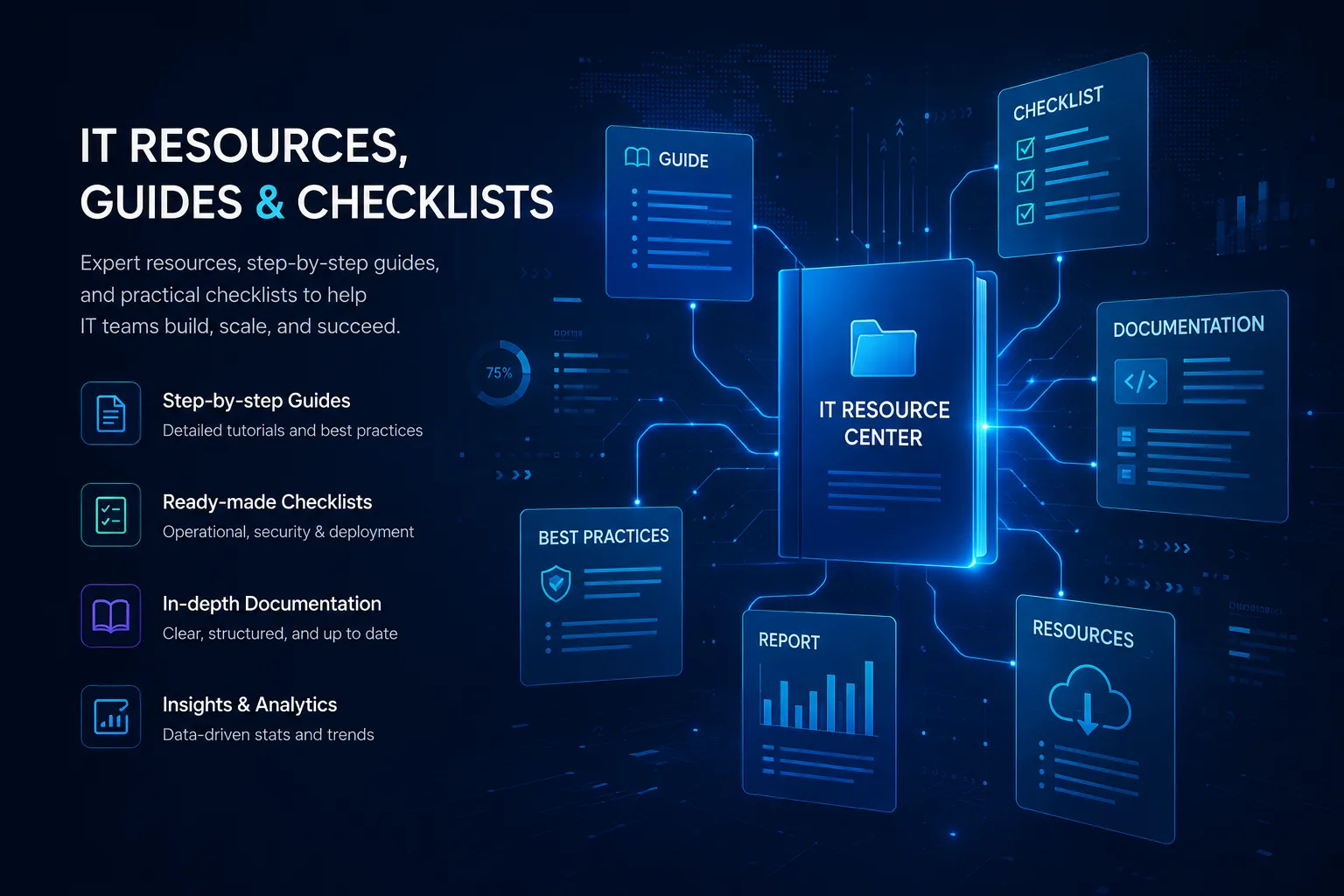
What This Resource Library Actually Covers
Most "IT resources" pages are recycled blog posts with a lead-capture form bolted on. This one is different: it's a working set of guides and checklists pulled directly from the questions clients ask us before, during and after a project - things like "why did one developer quote me three times more than another," "what should be in a mobile app SOW before I sign it," or "how do I know if my SEO agency is actually doing anything." Each guide is scoped to one decision point, not a general overview of "how websites work."
The content exists because the gap between a client's mental model of a project and the technical reality is usually where budgets blow up, timelines slip, and support relationships turn adversarial. These guides close that gap before the contract is signed, not after the invoice is disputed.
Who Actually Uses These Guides
The audience is deliberately narrow: people who have to make a buying decision about technology but don't write code or run campaigns themselves. That includes founders comparing three website quotes that differ by 4x with no obvious reason, marketing leads trying to figure out why organic traffic dropped after a redesign, operations heads evaluating whether to build custom software or buy an off-the-shelf HRMS, and product managers who need to brief a mobile app vendor without getting talked into unnecessary scope.
If you already have an in-house CTO or technical co-founder, most of this will be familiar ground. These guides are built for the gap where that role doesn't exist yet, or where the decision-maker needs a second, independent read before trusting a vendor's own explanation of their pricing.
Cost and Proposal Guides
The Website Development Cost Guide breaks down what actually drives price variance between a ₹30,000 template site and a ₹5 lakh custom build: CMS choice (WordPress vs. headless vs. fully custom), number of unique page templates versus reused layouts, third-party integrations (payment gateways, CRMs, inventory systems), content migration effort, and whether the quote includes QA, cross-browser testing and post-launch support or treats them as separate line items. It also covers the red flags in a lowball quote - usually missing hosting setup, no responsive testing budget, or unlimited "revisions" that quietly cap out after the first round.
The Mobile App Development guide walks through the native vs. cross-platform decision (Swift/Kotlin vs. Flutter/React Native) in terms of actual trade-offs: native gives you full access to device APIs and better performance for graphics-heavy or hardware-dependent apps, while cross-platform cuts development time and cost when the app is mostly forms, lists and API calls. It also covers what a realistic SOW should specify - API contracts, backend hosting responsibility, app store submission ownership, and who pays for Apple's and Google's review cycles when a submission gets rejected.
Technical Audit Checklists
These are step-by-step lists for non-technical stakeholders to run a sanity check on their own site or app before hiring anyone: checking Core Web Vitals in PageSpeed Insights, confirming SSL and basic security headers, reviewing whether a CMS has unpatched plugin versions, checking if a sitemap and robots.txt are actually configured correctly, and verifying that Google Search Console and Analytics are properly linked and not reporting crawl errors that have been ignored for months. None of this requires developer access - it's meant to be run from a browser in twenty minutes.
Vendor Evaluation and RFP Guides
For custom software, HRMS, ERP or AI automation projects, the relevant guides focus on how to write a request for proposal that actually produces comparable bids: fixed functional requirements versus "nice to have" features, data migration scope, integration points with existing tools (Tally, Zoho, existing HR systems), hosting and infrastructure ownership, source code and IP ownership terms, and what a reasonable warranty/bug-fix period looks like after go-live. Vendors that quote wildly different numbers for the "same" project are usually scoping different things - these guides help you catch that before you're mid-contract.
Post-Launch Ownership and Data Guides
A recurring problem we see is clients who don't actually control their own domain registrar login, hosting account, CMS admin credentials, or app store developer account after a project wraps - the previous agency holds all of it. These guides walk through exactly what credentials and access a client should insist on owning outright, what a reasonable handover document looks like, and how to structure a maintenance retainer so it's billed against actual hours or defined deliverables rather than an open-ended monthly fee.
How the Guides Connect to Our Services
Each guide links to the relevant service area - website development, mobile app development, SEO, custom software, HRMS, or AI automation - so if a checklist surfaces a problem you can't fix yourself (a botched migration, a security gap, an SEO audit that turns up structural issues), there's a direct path to the team that handles that specific work. The guides are written to be useful even if you never contact us; they're not gated behind a form, and they don't push a specific vendor decision. The goal is that by the time you do talk to a developer, agency or in-house hire, you're asking the right questions instead of taking their word for the answers.
How Often These Are Updated
Cost guides get revisited when pricing benchmarks shift meaningfully - new framework adoption, changes in App Store/Play Store review policies, or shifts in typical developer day rates. Technical checklists get updated when Google changes ranking signals, Core Web Vitals thresholds, or security baseline recommendations. If you're referencing a specific guide for a live project, check the last-updated context before treating a number as current.