
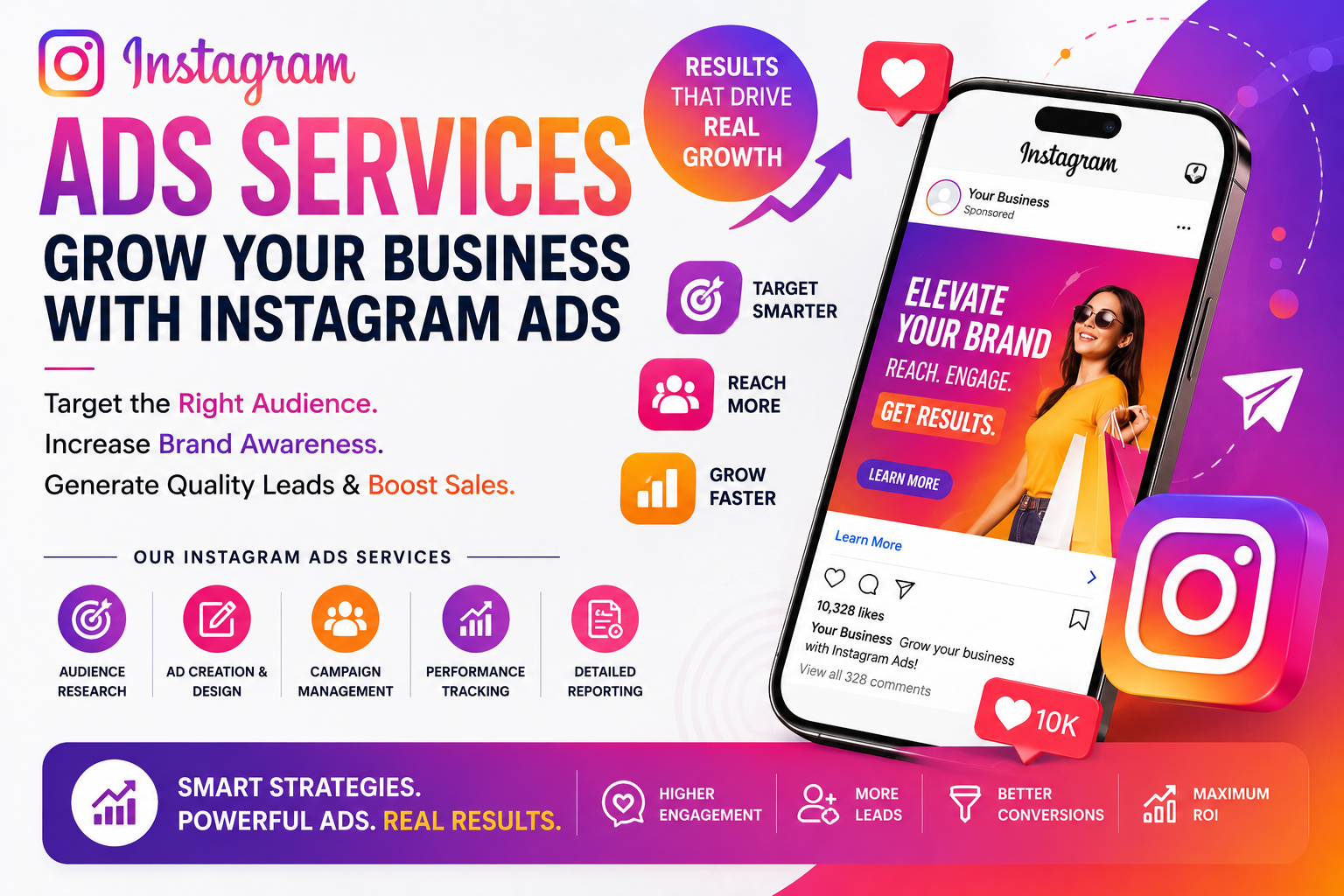
Why Instagram Ads Behave Differently From Other Paid Channels
Instagram is a visual-first, scroll-fast environment run through Meta Ads Manager, which means campaign performance depends heavily on creative format, hook speed and placement mix (Feed, Stories, Reels, Explore) rather than keyword intent like Google Ads. A campaign that works on Facebook feed often underperforms on Instagram Reels because the audience expects native, fast-cut vertical video rather than a static banner. Managing Instagram Ads properly means treating creative as a variable to be tested continuously, not a one-time asset handed to the media buyer.
Urgent IT Solution manages Instagram advertising for businesses that need measurable outcomes - qualified leads, app installs, product sales, or store visits - and are already spending or planning to spend a meaningful monthly budget on the platform. This is not a service for brands looking only for follower growth or vanity engagement.
What Our Instagram Ads Management Actually Covers
Account and Pixel Foundation
Before any ad is built, we audit or set up the Meta Business Manager, Instagram professional account linkage, Meta Pixel, and Conversions API (CAPI) for server-side event tracking. With iOS tracking restrictions and browser cookie limitations, we prioritise CAPI plus first-party data (via CRM or website events) to keep attribution usable. We also configure Events Manager to track add-to-cart, lead form submission, purchase, and custom micro-conversions relevant to the client's funnel.
Campaign Structure and Objective Selection
We build campaigns around the actual objective inside Meta's current framework - Awareness, Traffic, Engagement, Leads, App Promotion, or Sales - and structure ad sets by audience logic rather than arbitrary segmentation. Typical structures we use: a broad Advantage+ audience feeding the algorithm with strong creative signals, alongside 1-2 controlled test ad sets for interest or lookalike comparisons. We avoid over-segmenting into 10+ tiny ad sets, which starves the algorithm's learning phase and inflates cost per result.
Creative Production for Instagram Formats
Since format dictates performance, we plan creative separately for Reels (9:16, native-feel video, 6-15 seconds, on-screen text hooks in the first 2 seconds), Stories (full-screen vertical with swipe-up/link stickers), and Feed (square or 4:5 image/carousel). We script short-form video ads with a hook, problem statement, product demonstration and clear CTA, and we build carousel ads for catalog or multi-feature products. Where a client has an existing product catalog, we set up Advantage+ Catalog Ads for dynamic retargeting.
Audience Strategy
We combine three audience layers: cold prospecting audiences (interest stacks, lookalikes built from purchase or lead events, or broad Advantage+ targeting), warm retargeting audiences (video viewers, profile visitors, Instagram engagers, add-to-cart abandoners), and hot audiences (past purchasers, existing leads for upsell or repeat campaigns). Retargeting windows and exclusions are tuned based on the client's typical sales cycle length rather than a default 30-day setting.
Budgeting, Bidding and Optimisation
We set initial budgets to clear Meta's learning phase (generally targeting around 50 optimisation events per ad set per week before making major changes) and use Campaign Budget Optimisation (CBO) or Advantage+ campaign budget where it fits the account's data volume. Bid strategy choices - Lowest Cost, Cost Cap, or Bid Cap - are matched to how much control the client needs over cost-per-result versus volume. We track CPM, CTR (link and outbound), CPC, cost per lead/purchase, and ROAS, and we review at intervals long enough to respect statistical significance rather than making daily knee-jerk changes that reset the algorithm's learning.
Creative testing runs on a rolling basis: we typically test 3-5 creative variants per concept, measure hook rate (3-second video views) and hold rate (thumb-stop ratio), and rotate in new creative before fatigue sets in - usually signalled by rising CPM and falling CTR on a previously strong ad.
Reporting and What We Actually Measure
Monthly or bi-weekly reports cover spend, results, cost per result, ROAS (where applicable), frequency, and creative-level breakdowns showing which hooks and formats are winning. For lead-generation clients, we also track lead quality by connecting Meta lead data back to CRM outcomes (qualified vs. junk leads), since cost-per-lead alone can be misleading if the lead form or targeting is attracting the wrong audience.
Who Needs This Service
- D2C and e-commerce brands running catalog sales or new product launches on Reels and Stories
- Service businesses (real estate, education, healthcare, home services) needing qualified lead form or WhatsApp click-to-message campaigns
- App-based businesses running install and in-app event campaigns
- Brands with an existing but underperforming ad account needing a structural audit rather than a rebuild from zero
How Urgent IT Solution Runs the Engagement
We start with an account and pixel audit, a review of past campaign data (if any exists) to identify what has already been tested, and a competitor creative scan to understand format and offer benchmarks in that specific category. From there we define a 30-day testing plan with clear creative and audience hypotheses, launch with conservative budgets to protect the learning phase, and scale spend only on ad sets that clear an agreed cost-per-result threshold. Creative production, copywriting, and campaign management are handled together so ad concepts aren't disconnected from what the account structure can actually support.
Common Mistakes We Fix in Existing Accounts
- Fragmented ad sets that never individually reach the learning phase threshold
- Missing or broken Conversions API setup, leading to under-reported results and poor algorithm optimisation signal
- Static feed-only creative reused across Reels placements where it performs poorly
- No retargeting layer, so warm traffic from Stories or Reels engagement is never brought back for conversion
- Optimising for link clicks when the actual business goal is leads or purchases, which trains the algorithm to find the wrong users
Getting Started
We ask for access to the existing Meta Business Manager (or set up a fresh one), a look at current or recent product/service creative assets, and clarity on the primary conversion goal - leads, sales, installs, or store visits - before proposing a campaign structure and initial budget allocation. From there, the first testing cycle usually runs two to four weeks before we make structural scaling decisions.