
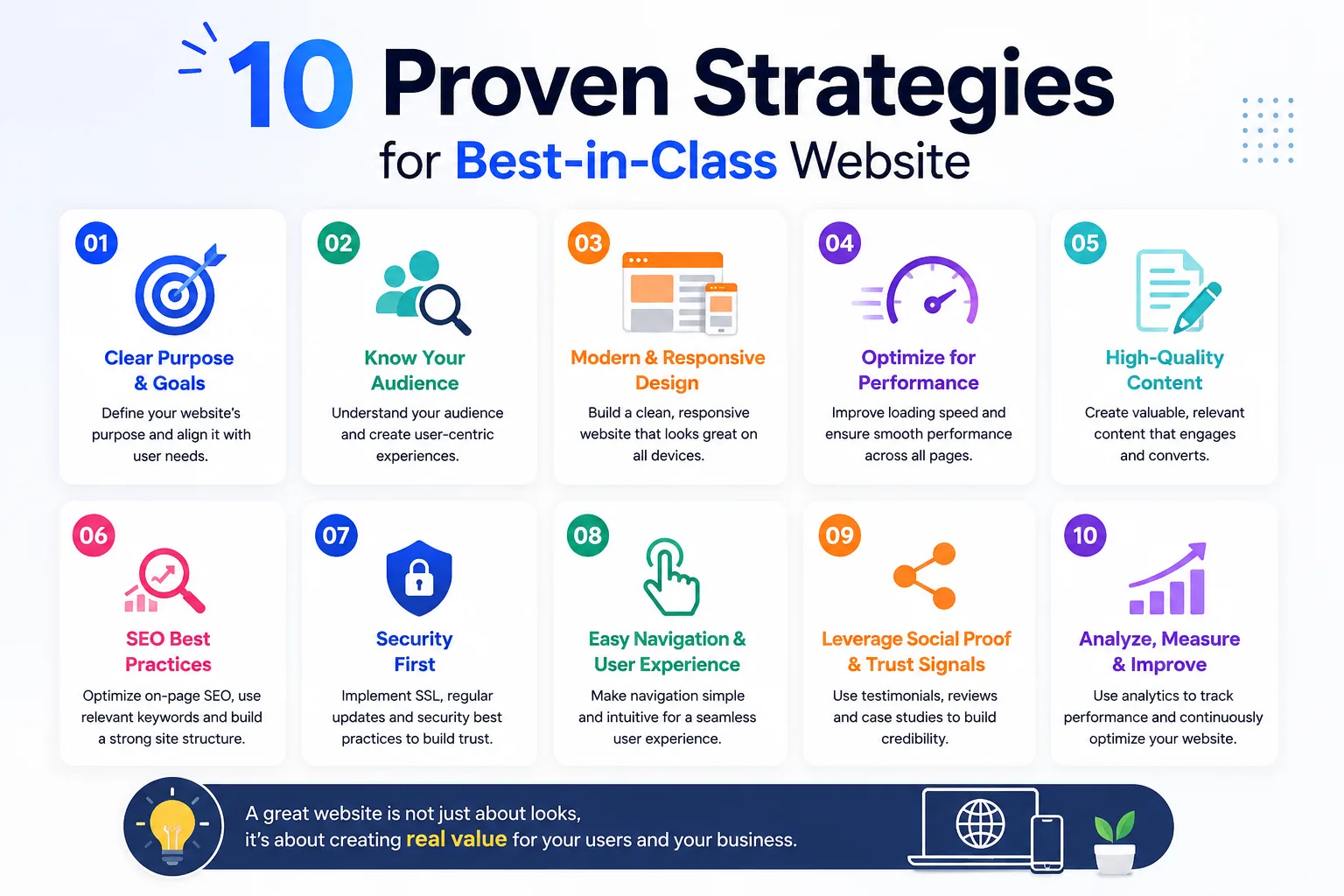
Welcome to the modern era of web development, where your website serves as the digital storefront and primary growth engine for your business. Building a top-tier website goes far beyond writing lines of code; it requires a strategic blend of design, performance, security, and user experience.
If you want to ensure your website development process yields the best possible results, here are the essential strategies you need to implement.
1. Prioritize User Experience (UX) and User Interface (UI) A visually stunning website is useless if users can't navigate it intuitively. Keep your design clean, modern, and uncluttered. Use clear calls-to-action (CTAs), intuitive navigation menus, and readable typography. Remember, a great UI captures attention, but a flawless UX retains it.
2. Adopt a Mobile-First Approach With over half of all global web traffic coming from mobile devices, responsive design is no longer optional—it's mandatory. Start designing and developing for mobile screens first, then scale up to tablets and desktops. This ensures your site loads quickly and functions perfectly on smaller screens, keeping mobile users engaged.
3. Optimize for Lightning-Fast Speed Users expect a website to load within two to three seconds. Anything slower, and your bounce rate will skyrocket. Optimize your website's performance by compressing images, minifying CSS and JavaScript files, leveraging browser caching, and using a reliable Content Delivery Network (CDN).
4. Ensure Robust Security Measures Cybersecurity threats are evolving every day. Protect your website and your users' data by implementing an SSL certificate (HTTPS), conducting regular security audits, using parameterized queries to prevent SQL injections, and keeping all plugins and CMS platforms strictly up to date.
5. Write Clean, Scalable Code Your code should be well-documented, organized, and modular. Writing clean code not only minimizes bugs and loading times but also makes future updates and maintenance significantly easier. Stick to industry-standard frameworks and avoid bloated, unnecessary scripts.
6. Build with SEO in Mind from Day One Search Engine Optimization should be woven into the fabric of your website during the development phase, not added as an afterthought. Use proper heading tags (H1, H2, H3), optimize URL structures, create XML sitemaps, and ensure your site is easily crawlable by search engine bots.
Conclusion Achieving the "best" in website development is a continuous process of learning, testing, and refining. By prioritizing user experience, speed, mobile responsiveness, and security, you lay a rock-solid foundation for a website that not only looks great but drives real business results.